
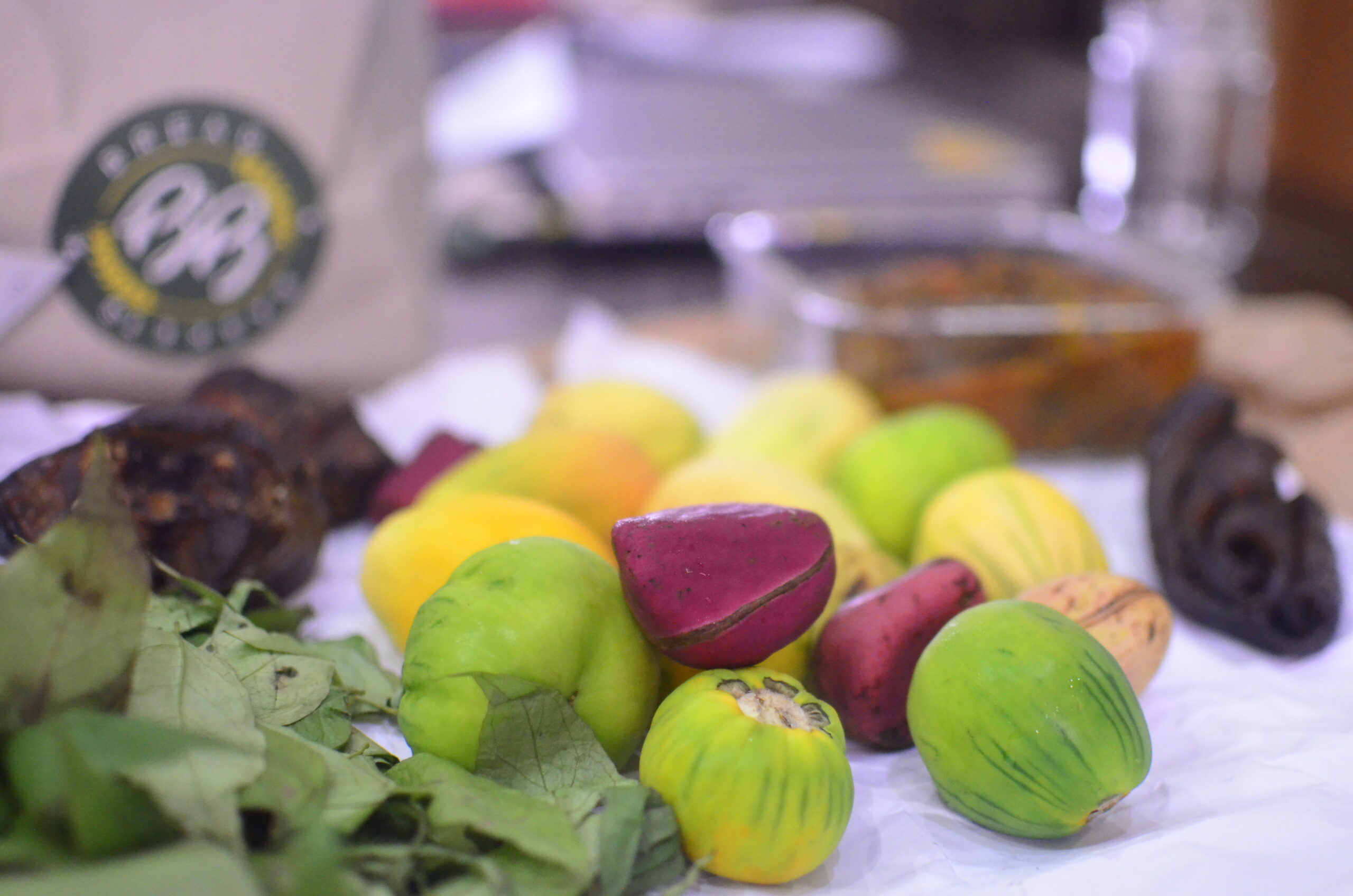
The kolanut, kola nut (genus cola, family Malvaceae) is important in Nigeria – honored, revered, an icon in our culture, present in celebrations, for prayers, thanksgiving, and more. The kola nut’s benefits are many – snack, stimulant, and also every day – think of your favorite cola drink, pretty much a soda’rized version of kola nut tea, and you may already be familiar with it. Yes, the original source of the drink we now consider cola was based on cola essence/ kola essence/ kola extracts/ cola extract from the kola nut.

I’ve encountered many types of cola – regular, lepidota, and millenii though this variety I share here is what’s most common to me.
For most of my life, I knew it as the pillar of rituals, traditions, prayer, at occasions. As the essence of cola drinks. But as an ingredient to be eaten, feasted on? No. Not until Carol introduced me to yedem’blong. That opened me up to so many possibilities with it. In brief, yedem’blong is a platter of leaves and bites, fashioned into leaf wraps and served with a spicy, peppery sauce, perfect for dipping. It is a dish from the south south of Nigeria, in Ugep.


For decades, I didn’t know what vessel held kolanuts, and to be honest, I didn’t think much about it until I went to Cote D’Ivoire in late 2019 and learned, saw that they grow in hard pods, kind of like cocoa pods. Little did I know they were related.


Break the pod open and you’ll find nestled within seed pods, the kolanuts encased within.

Once the seeds are cut or pried open, you’ll find the kolanuts, covered with thin, papery husks that loosen a bit from the nuts the drier they become.

Then you’ll find the ‘nut’ on the inside. It comes in a variety of colors – white, red, green. The white tends to be sweeter or milder flavored compared with the red. In Hausa, Fari and Ja, they are called Goro and described based on colours.

In a post I shared on Instagram, Ronke of 9jaFoodie shares: I don’t think I have ever seen the green variant or heard the Hausa kola reference even (time to connect with grandma on some lessons) – In Yoruba culture, the red/pink variant is Abata while the whiteish variant is known as gbanja. Abata is the most commonly used in rituals, ceremonies, and social gatherings. There are loads of significance around the number of lobes as well.

A couple of years ago, I was writing a piece for The Republic, exploring gastrocriticism in Buchi Emecheta’s work, particularly in her book, The Joys of Motherhood. I loved the bittersweet nature of the book, and in many ways, that’s what the kolanut symbolizes for me. O decided to go ham in the kitchen and ended up exploring so many things from cola tea to drink, and liqueurs, 2 ways. I made jelly, candied some, rustled up cookies, and had such a good time exploring.

I love meeting familiar ingredients in new places, exploring the nuance of their characters and flavors, #NewNigerianKitchen style, and the kola nut is no exception. Welcome to #TravelbyPlate – my series of explorations on origins, stories, recipes through culinary heritage.
I learned many things, including some things you can only learn when you’re away from home and have kolanuts to hand (which makes me think of how I learned to make suya)
– how do I keep kolanuts fresh? Wrap them in damp cloth, ideally jute but also damp terry cloth or leaves. Thank you to everyone who shared when I asked on instagram,
– the number of lobes is significant in Igbo culture. – I say Nigerians aren’t into numerology but I’m rethinking that
So, what do you know about Kolanuts? I’ll be sharing kolanut recipes in my next post!
Stay well x.
Leave a Reply