
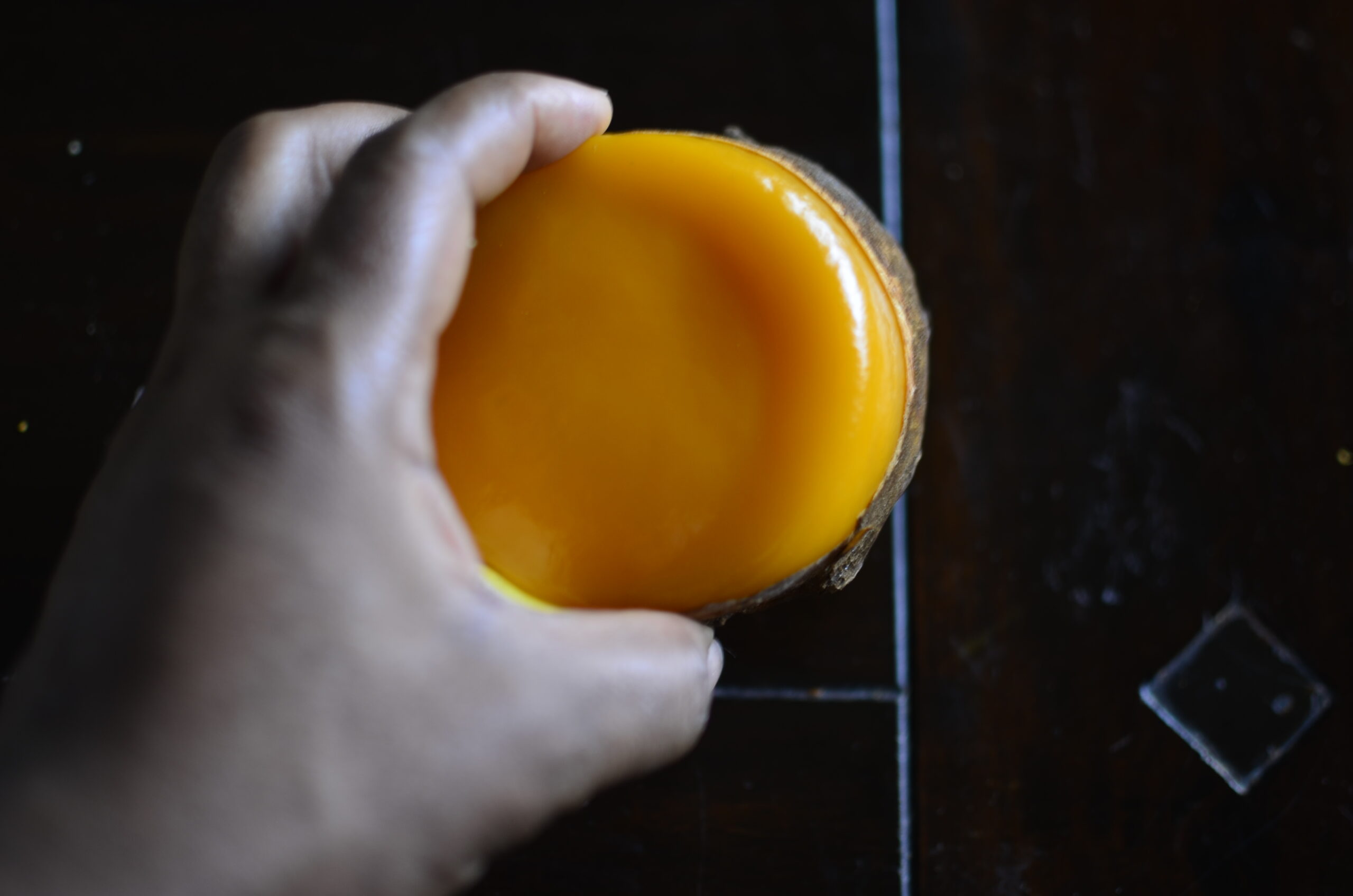
When I first moved back to Nigeria, I came across this rainy season fruit…and no one could tell me its common denominator botanical name. And therein laid my desperation. I first gathered all the local names I could find – Epapa (in Kalabari, a language indigenous to people in the south of the country in Rivers state, Achicha from the Igbos of the southeast, Ajirinja…..from, I don’t know.
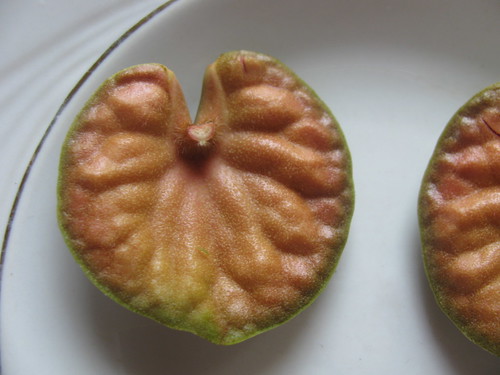
My first thoughts – a giant pea in a dusty brown, velvet pod, often smooth, sometimes with knobby bits, and about 6 centimeters long and 4 centimeters across.
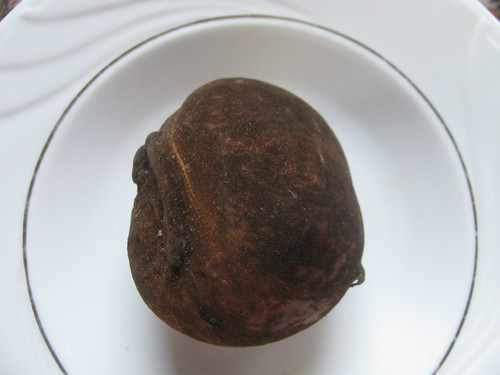
After a good scrub, it loses the softness of its skin and shows burnished shades of orange. But the best is yet to come. To get the skin off in the easiest way possible, the services of a knife is employed in creating an ‘equator’ line, preferably around the join. This makes peeling back the thin skin easy to reveal the true star of the show – bright orange fruit (or vegetable) with body smooth and shiny as polished marble.
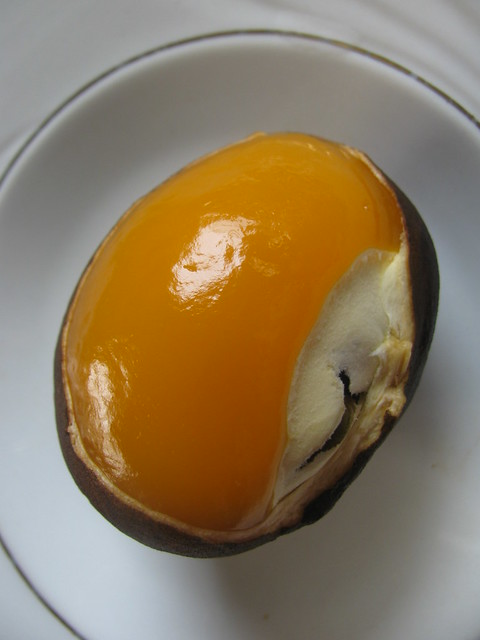
Once the ‘orange’ is revealed, it resembles a hard, somewhat oval ‘persimmon’ , with a creamy cap.
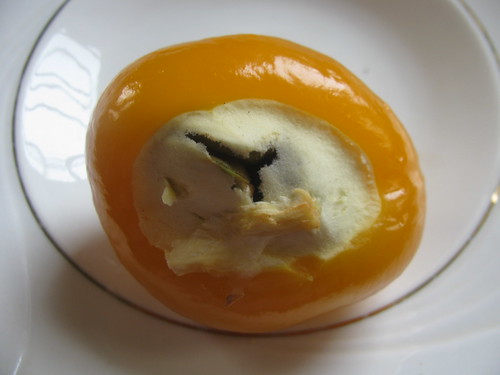
This mango-coloured flesh is crunchy, but not in an unripe mango-type way. And though a hard centre seed is common to both, the seed of this fruit is heart shaped and can be split into two parts.
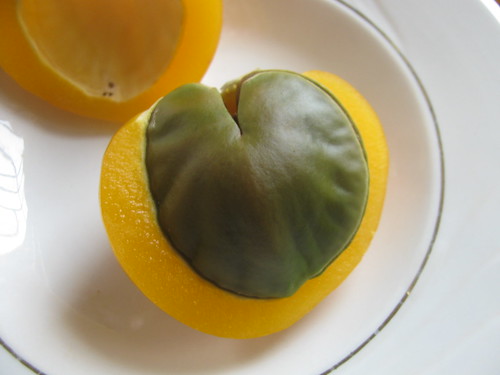
A scrape of the white lining, which cushioned the seeds and two thin halves, about half a centimeter thick of one fruit are ready to be crunched.
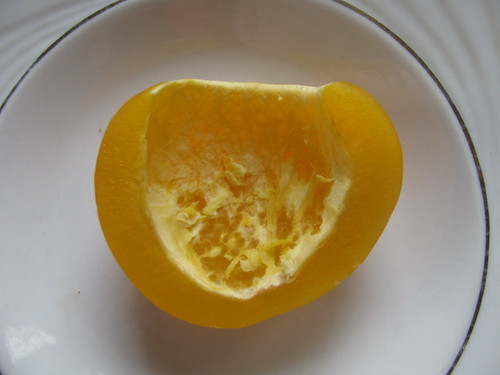
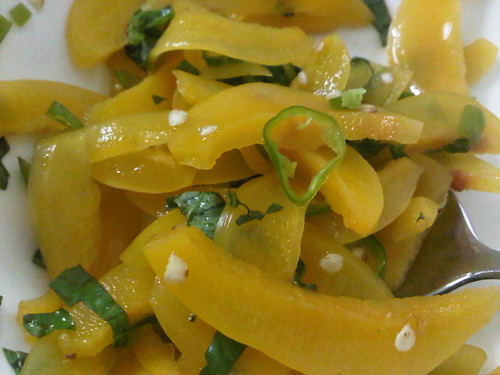
The taste is fascinating – think carrots and fresh green peas. Somewhat sweet and juicy with a decidedly ‘spring’ /clean flavor. When I tired of eating it, I attempted to pickle it with sugar and salt, and toss it with some green chilli peppers and basil. Interesting flavors and texture – chewy with a bit of crunch.
I would discover so many other relatives of this fruit to my pleasure, like Obi-Edun, cola millenii. And, many more things to do with Epapa, from eating out of hand to relish.
Have you come across it before? Tell me all, including how you enjoy it best x
Leave a Reply